When Were Glasses Invented?
Feb 09, 2026
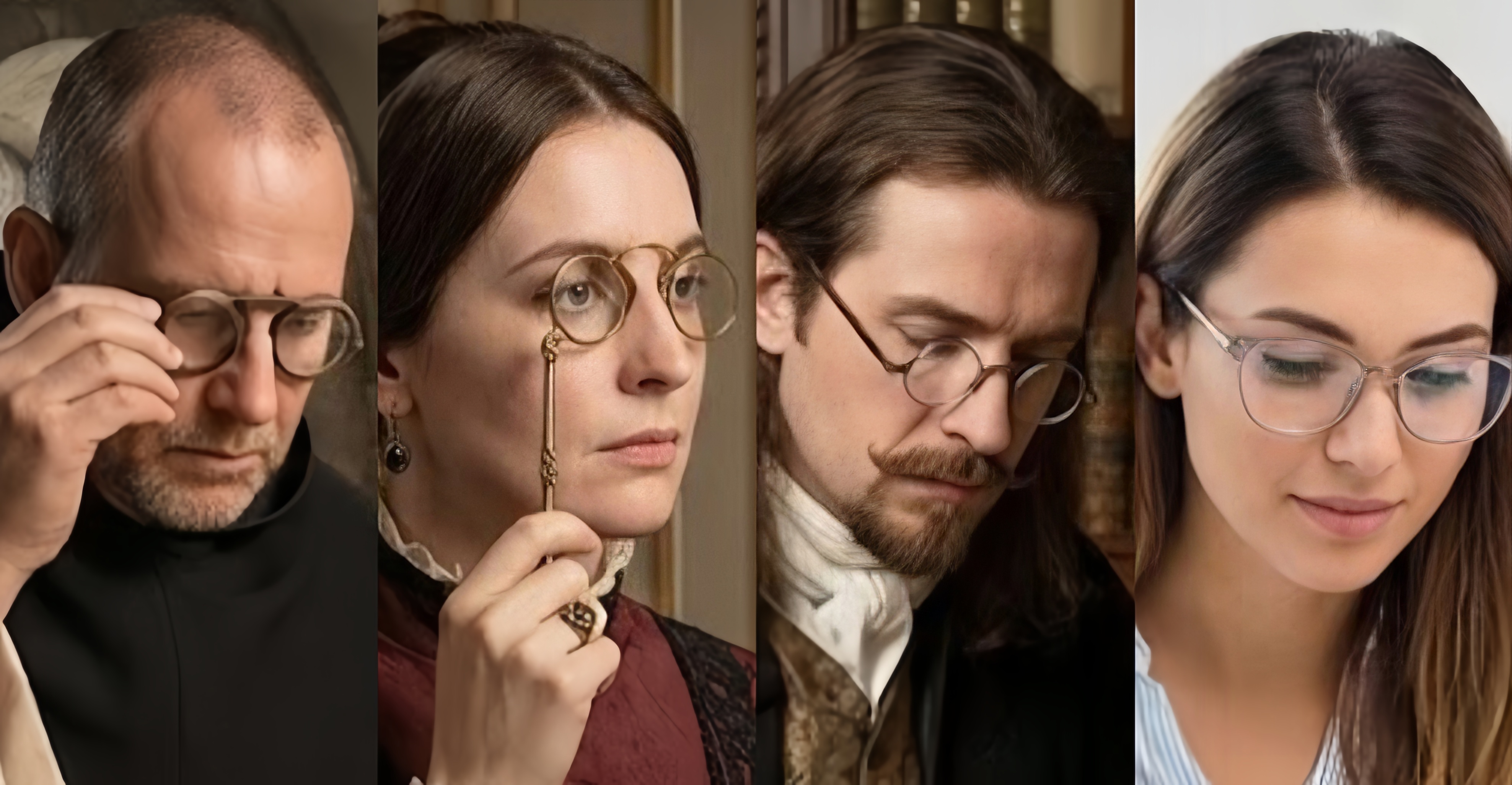
Seeing Clearly Didn’t Start with Screens. We sometimes forget that glasses have a long and interesting history because they are so popular now. People were looking for solutions to see better long before smartphones and LED screens hurt our eyes. This trip through time shows how basic lenses became one of the most important technologies in history, starting with monks and scholars in medieval Italy.
The Birth of Vision Aids: From Ancient Times to the Middle Ages
Long before modern glasses, humanity experimented with lenses and vision aids. This section traces the early origins, from polished stones to the first wearable frames in medieval Italy.
Early Magnifying Tools in Ancient Civilizations
In ancient Rome and Egypt, glass and crystal lenses were used to read and look at things more closely. During the Islamic Golden Age (9th–13th centuries), Arab intellectuals like as Ibn Al-Haytham made progress in optics theory, which eventually had an impact on the creation of eyeglasses in Europe. By the 15th century, glasses had made their way to East Asia, where they were used alongside traditional "crystal eye tools." However, the way they were used was different because of cultural and practical variations.
The First Wearable Glasses in 13th-Century Italy
Italian monks and intellectuals made convex lenses in the late 1200s to help those who were nearsighted. This was the first time that glasses could be worn. Early frames didn't have temples; they either rested on the nose or were held like "reading stones." They immediately became popular in monasteries and colleges for reading and writing. This was the change from handheld instruments to personal visual aids.
Medieval Advances Leading to Modern Concepts
By the 14th century, glasses had made their way to France, England, and other parts of Europe. Artisans improved lens grinding and frame-making skills, which made them clearer and fit better. Eyewear went from being rare instruments to desirable personal goods, which changed education, literacy, and daily life and set the foundation for centuries of new ideas.
Key Innovations That Shaped Modern Eyewear
The journey of eyewear is filled with clever breakthroughs that turned simple vision aids into the comfortable, stylish glasses we know today. Here’s a look at the major milestones that defined the evolution of eyeglasses timeline.
The Addition of Temples (Side Arms)
In the early 1700s, temples, which are the arms that go over the ears, were added. This new idea made it possible for glasses to stay in position without needing to be held up by hands all the time. Temples in the past were generally composed of metal or wire and were sometimes connected together with string or ribbon. Over time, temples got more curved and comfortable, making them easier to wear every day. It became more useful and accepted in society to wear glasses with temples. This change in design helped make glasses into everyday items instead of only intellectual equipment.
The Invention of Bifocals
Benjamin Franklin made bifocal lenses in the late 1700s. These lenses let people view things both close up and far away without having to change glasses. The idea of bifocals was the starting point for progressive lenses that are still used today. It changed the way people wear glasses by combining different vision needs into one pair, making reading and seeing far away easy.
Mass Production and Material Advancements
Factories started making a lot of eyeglasses in the 1800s. Not just the rich or the smart could purchase glasses anymore. They were more available and affordable for everyone. Steel, brass, and horn were some of the materials used to make early frames. Plastics like cellulose nitrate and subsequently acetate made designs lighter, more colorful, and safer by the early 1900s. Better lens grinding and prescriptions made vision correction more accurate. Pre-cut lenses and adjustable nose cushions became prevalent, making both function and comfort better.
Glasses Today: From Necessity to Lifestyle Statement
Eyewear has come a long way from its origins as a simple vision aid. Today, glasses are powerful tools for self-expression, advanced technology, and conscious living. Here’s a look at the modern evolution that defines history of eyeglasses timeline in the 21st century.
Eyewear as Fashion
In the middle of the 20th century, glasses were more than just a way to see better. They also became a way to show off your style. Big frames became fashionable because of renowned people and celebrities. High-end fashion brands began creating spectacles with their own unique styles and seasonal collections. Statement frames not only worked, but they also started trends. These include varieties with cat eyes, big eyes, and colorful eyes.
Technology Meets Optics
New technologies like blue light filters, anti-reflective coatings, and photochromic lenses make glasses more comfortable and protect your eyes better. Smart glasses are becoming more popular because they have capabilities like augmented reality, fitness tracking, and hands-free calling, which make them a useful tech accessory.
Sustainability in Focus
Using biodegradable acetates, recycled metals, and plastics made from plants has less of an effect on the environment. Brands that use ethical labor methods and offer programs for recycling old frames help make the eyeglass economy more circular, which makes style choices more responsible and forward-thinking.
A Timeless Invention That Keeps Evolving
From polished stones in ancient times to smart, sustainable eyewear today, glasses have come a long way. They’ve evolved from simple vision aids into everyday essentials that reflect who we are—both practically and personally. Whether you're after clarity, comfort, or style, modern eyewear has something for everyone—just explore the right pair for you.
From their humble beginnings to today’s fashion-forward designs, glasses have come a long way. At GlassesShop, we honor that evolution with modern frames and advanced lenses that blend history, innovation, and everyday style. Whether you love timeless classics or contemporary trends, there’s a pair made for you. Use our Face Shape Detector to find your perfect fit, and enjoy Buy One Get One Free plus free shipping on orders over $69 — because great vision is always worth celebrating, past and present.