Types of Lenses: How to Choose the Right Option for Your Vision
Apr 28, 2026
Selecting the right lenses is far more than picking a clear option — it directly impacts visual clarity, daily comfort, eye health, and even the performance of your eyeglass frames. With a wide range of lens types, coatings, and functionalities available, many people feel overwhelmed and end up with lenses that don’t match their vision needs or lifestyle. Understanding the core categories of lenses, their unique benefits, and key selection criteria will help you make a confident, informed choice tailored to your personal vision requirements.
Core Vision Correction Lenses
Choosing the right type of lens is one of the most important decisions when buying eyeglasses. The lens type directly determines how clearly you see at different distances, how comfortable your vision feels throughout the day, and how well your glasses perform for your specific lifestyle. Below are the main categories of vision correction lenses and when each one is most suitable.
Single Vision Lenses
One particular vision problem, such as nearsightedness (myopia), farsightedness (hyperopia), or astigmatism, is corrected using single vision lenses, which have a consistent prescription throughout the lens. They are the most popular and reasonably priced lens type, which makes them perfect for kids, teens, and adults with simple vision correction requirements. For everyday tasks including reading, using screens, driving, and general movement, these lenses perform remarkably well. Even for larger prescriptions, contemporary single vision alternatives come in lightweight, thin materials that provide superior optical clarity without needless weight or thickness.
Bifocal Lenses
Bifocal glasses, often known as bifocal eyeglasses, combine two different prescription powers into a single lens: a lower piece for near vision (reading) and an upper section for distance vision. They are ideal for presbyopia people who have trouble with both near and distance blur since they reduce the need to continually switch between various pairs of glasses. Modern flat-top and round-segment bifocals provide a smoother transition and a larger field of view for close work, whereas traditional bifocals feature a noticeable line between the two prescriptions. For many people who want dependable near and far vision in a single pair, bifocal glasses continue to be a useful and affordable option.
Progressive (No-Line Multifocal) Lenses
With no visible lines, progressive lenses enable a smooth, gradual transition between near, middle, and distant prescriptions, creating a natural visual experience. They combine full-range vision correction with aesthetic appeal, making them the most popular multifocal alternative for presbyopia users at the moment. Even new multifocal users can benefit from high-definition progressive lenses since they lessen peripheral distortion and adapt faster. It is crucial to comprehend progressive glasses meaning, which function as a "ladder" of visual power. With just one lens, you can gaze straight ahead for distance, slightly down for intermediate (computing), and further down for reading. Many people report that getting used to progressive lenses takes 1–2 weeks, but once adapted, they provide unmatched convenience.
Prism Lenses
Eye alignment problems including diplopia (double vision) and strabismus (crossed eyes) can be corrected with prism in eyeglasses, also known as eyeglasses with prisms. They relieve chronic eye strain, headaches, and neck pain brought on by the eyes overcompensating by rerouting light to correct visual misalignment. Prism lenses are adaptable for focused vision correction since they can be used with single vision, bifocal, or progressive prescriptions. Because they require specific grinding, prism lenses cost more than regular lenses, but they frequently offer substantial relief for those with binocular vision issues.
Index & High-Index Lenses
Lens index refers to how efficiently the material bends light. The higher the index number, the thinner and lighter the lens can be for the same prescription. Choosing the right index is crucial for both aesthetics and comfort, especially with stronger prescriptions.
Standard Index Lenses (1.50)
Standard index lenses (1.50 index) are constructed of simple optical plastic and are still the most popular choice for new prescription glasses. They are cheap and last a long time for prescriptions that are low to moderate (usually ±2.00 or lower). They are a good choice for casual wearers who need simple vision correction because they are not too thick and perform well with tiny frames. People of all ages, from kids to teens to adults, like these lenses since they work well and are cheap.
Mid-Index Lenses (1.56 – 1.60)
Mid-index lenses are a great choice because they are thin, light, and cheap. They are substantially smaller and lighter than regular index lenses, making them great for mild to moderate prescriptions. This makes medium-sized frames less bulky and makes them much more comfortable to wear all day. Mid-index lenses work with most lens coatings and corrections, so they are a flexible mid-range choice for consumers who desire improved looks without spending a lot of money.
High-Index Lenses (1.67 – 1.74)
High-index lenses are made of modern optical material that bends light better, which makes them very thin and light. They are made for people with high prescriptions (±4.00 and up), which makes the "coke bottle" effect far less noticeable and makes the glasses look much better overall. High-index lenses are the best choice for large or stylish frames since they make the lenses lighter overall, which reduces pressure and tiredness on the face. They also look great with more advanced choices like polarized prescription sunglasses and photochromic lenses.
Lifestyle & Functional Lenses
Beyond basic vision correction, modern lenses can actively support your daily lifestyle, protect your eyes, and enhance comfort. Here are the most popular functional lens types and how they benefit real-life use.
Blue Light Filter Lenses
Blue light filter lenses are made to prevent or filter out dangerous high-energy visual (HEV) blue light from electronic gadgets, LED lights, and digital screens. They help with headaches, blurred vision, and digital eye strain caused by spending too much time in front of a screen. This makes them great for students, office professionals, and people who work from home. You can get blue light lenses that are clear or mildly colored, and you can mix them with different prescriptions for everyday usage.
Photochromic Lenses
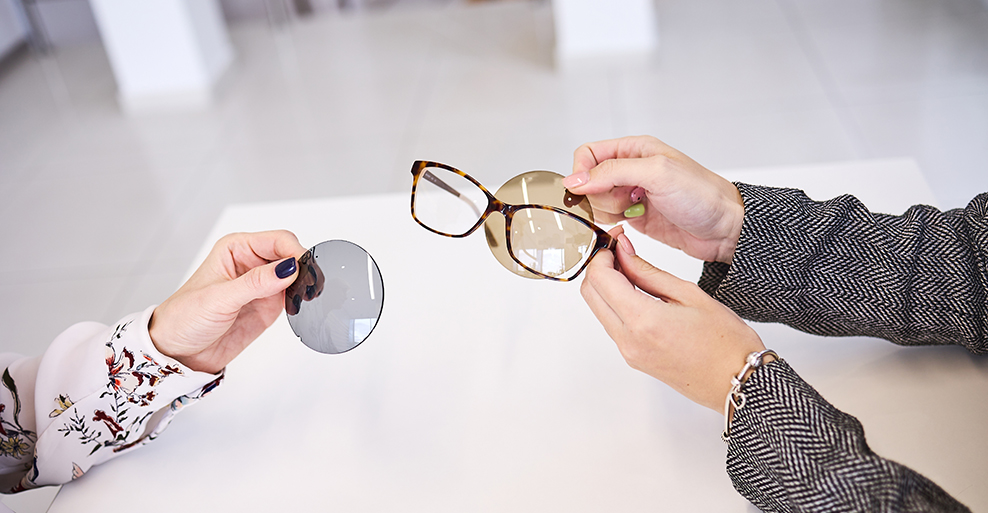
Photochromic lenses are adaptive optical lenses that change their tint density automatically depending on how much UV light they get. They get darker outside and clearer inside. They shield you from UV rays all day long, so you don't have to swap between conventional glasses and sunglasses. They also work for a variety of indoor and outdoor activities. These lenses come in a range of tints and work with most prescriptions for correcting eyesight, making them a useful all-in-one solution.
Transitions Lenses (Photochromic)
Transitions lenses are the most popular brand of photochromic lenses. They naturally get darker outside and clearer inside, making them true dual-purpose glasses. They block 100% of UV rays, instantly adjust to changing light conditions, and function perfectly behind automobile windscreens for everyday use. Transition lenses come in a range of tint hues and work with most prescriptions. They do away with the need for separate prescription sunglasses and offer all the photochromic lenses benefits.
Sunglasses Lenses Options
Choosing the right sunglass lenses is just as important as selecting the frame shape. Different lens types serve different purposes — from basic sun protection to advanced glare reduction and style. Here’s a breakdown of the most popular options.
Standard Tinted Lenses
Standard tinted lenses come in light, medium, and dark colors to cut down on brightness and make it easier on your eyes when it's sunny. Different tint colors have different uses: grey helps you see real colors, brown makes things stand out more, and yellow makes things easier to see in low light or cloudy conditions. They protect against UV rays well and come in prescription options, so they may be used for casual outdoor activities and everyday sun protection. Lens tint plays a big role in both comfort and visual performance.
Mirrored Lenses
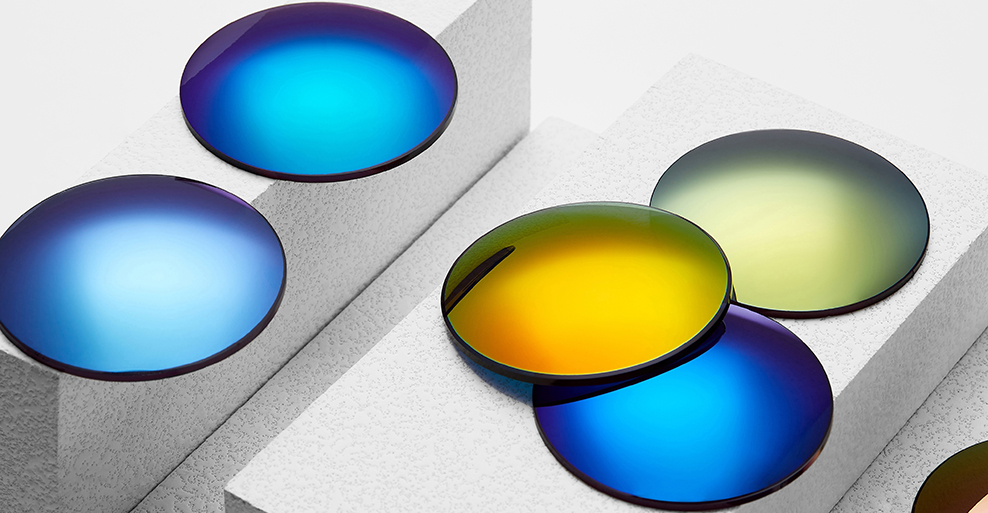
Mirrored sunglasses have a reflective metallic coating on the surface that blocks more light and cuts down on glare better than regular tints. They seem bold and fashionable, and they also give you more privacy by hiding your eyes from others. Mirrored lenses are great for places with a lot of glare, such beaches, ski slopes, and deserts. They are a popular choice for people who want their sunglasses to make a statement and shield their eyes from the sun.
Polarized Lenses
Polarized lenses have a specific filter that stops horizontal glare from roads, water, snow, and metal surfaces, getting rid of reflections that can blind you. They make things much clearer, make your eyes less tired, and make driving, boating, hiking, and other outdoor activities safer. Polarized prescription sunglasses are one of the best things you can get if you spend a lot of time outside because they fix your vision and protect you against glare. The benefit of polarized sunglasses is especially noticeable on bright days, where they cut glare and improve contrast significantly.
How to Choose the Right Lenses?
Choosing the right lenses is one of the most important decisions when buying eyeglasses. The best lenses not only correct your vision but also match your lifestyle, provide comfort, and offer long-term eye protection. Here’s a practical guide to help you decide.
Assess Your Vision Prescription & Condition
To find out what kind of refractive error you have—nearsightedness, farsightedness, astigmatism, or presbyopia—look at the results of your most recent eye exam. Choose the right lens type based on your prescription strength: single vision for basic correction, progressive glasses for presbyopia, or prism lenses for problems with alignment. If you're thinking about getting multifocal for the first time, learning what progressive glasses meaning means and becoming ready for the adjustment period (a lot of individuals need time to get used to progressive lenses) will help you make the right choice and avoid disappointment.
Consider Your Daily Lifestyle & Activities
Think on your daily activities, like how much time you spend on screens, how often you go outside, how often you drive, or how often you play sports. Put features like photochromic lenses for smooth transitions between indoor and outdoor settings, polarization to cut down on glare, or blue light protection for days when you spend a lot of time on your phone first. Transition lenses pros and cons are worth thinking about for active users. They are very convenient and protect against UV rays, although they may take a little longer to clear indoors than ordinary clear lenses. Choose lenses that can do more than one thing to cut down on the number of pairs of glasses you require.
Match Lenses to Your Frame & Budget
To eliminate thick edges, use large frames with high-index lenses. For active use, select strong frames with coated lenses that will last. To get the most for your money, start with core vision correction and then add specialty features that fit your budget. For the health of your eyes and the longevity of your lenses, always put UV protection and scratch resistance first. If you know the benefit of polarized sunglasses (less glare and better contrast), it can help you decide whether to buy conventional tints, mirrored sunglasses, or polarized prescription sunglasses.
Conclusion
To get the ideal lenses, you need to know about core correction kinds, high-index technologies, lifestyle options, and unique sunglass lenses that can help with all types of vision problems. You can choose lenses that give you clear vision, comfort, and long-term eye health by putting your prescription, daily activities, UV protection, and long-lasting coatings first. You may improve your vision, be safe inside and outside, and wear comfortable glasses all the time if you find the right lens.
The right lenses change everything — how you see, how you feel, even how you move through your day. At GlassesShop, choose from single vision, progressives, blue light blocking, photochromic, and more, all tailored to your exact prescription and lifestyle. Pair advanced lens options with frames that match your personal style for a look that’s both smart and effortless. Try our Face Shape Detector, enjoy Buy One Get One Free, and get free shipping on orders over $69 — because better vision starts with better choices.