How Lens Thickness Is Calculated: A Simple Guide for Eyeglass Buyers
Mar 04, 2026
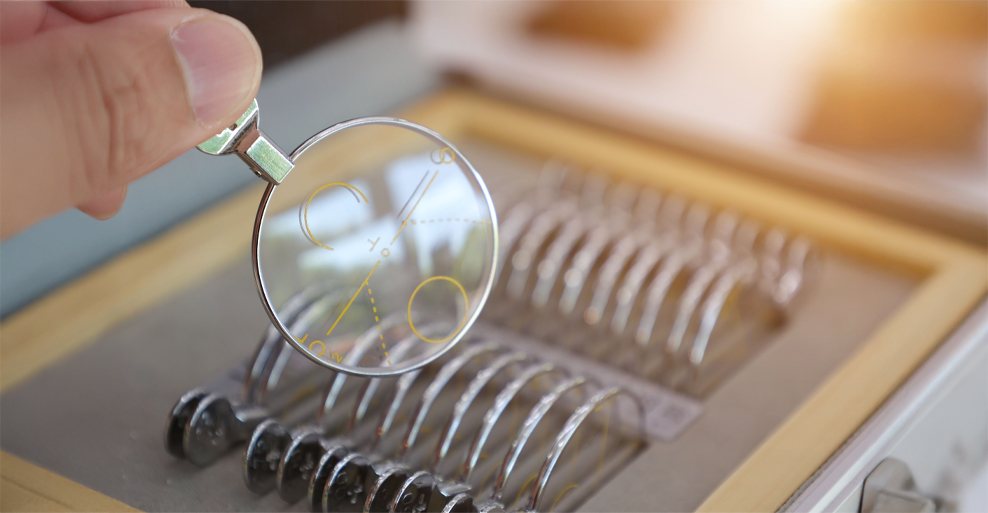
Lens thickness comes from your prescription strength, lens index, frame size, and pupillary distance. These all work together to estimate how thick the lens gets at the center or edges. Some glasses just end up looking chunkier. Minus prescriptions make the edges thicker, plus prescriptions bulk up the center, and bigger frames spread everything out. Lower-index materials don’t bend light as much, so they need more thickness. Thicker lenses bring extra weight and can push the frames forward, which isn’t always comfortable or stylish. Thicker lenses can really change how glasses feel and look.
This guide digs into how prescription power affects thickness, why the lens index matters, how frame shape changes the outcome, and which design tweaks help slim things down. Opticians use standard optical formulas and online lens thickness calculators to help you get lenses that fit your vision and your frames.
The Three Main Factors That Determine Lens Thickness
Lens thickness comes down to three things: your prescription numbers, the lens material, and your frame style. Each one changes how much material the lab needs to use.
Prescription Strength (SPH/CYL)
Your SPH and CYL values set the base thickness. Higher numbers mean the lens needs to bend light more, so it gets thicker.
SPH (Sphere): Minus prescriptions (for nearsightedness) make the lens edges thicker because the lens curves inward. Plus prescriptions (for farsightedness) make the center thicker since the lens curves outward. Stronger prescriptions really show up at the edges or center.
CYL (Cylinder): Astigmatism brings extra uneven curves. The lens has to be deeper in certain spots to correct your vision. Lenses might look thicker in just one direction, not all around.
As SPH and CYL go up, so does thickness—even if your frame doesn’t change.
Lens Refractive Index (1.50–1.74)
The refractive index tells you how well a lens bends light. Higher index lenses bend light better, so they need less material.
1.50 index: Standard plastic. Good for low prescriptions, but they get thick fast.
1.60–1.67 index: High-index lenses for moderate to strong prescriptions. They slim down the edges or center.
1.74 index: Ultra high-index for very strong prescriptions. Uses the least material.
High-index lenses stay thinner since they don’t need as much depth. You’ll notice lighter glasses and less obvious edges, especially with strong prescriptions.
Frame Size And Shape
Your frame design decides how much lens area the lab has to fill. Bigger frames use more material.
Lens width and height: Wider or taller frames push the lens edge farther out, which increases thickness.
Frame shape: Rounded frames keep thickness more even. Square or oversized frames make the edges thicker.
Frame fit: Frames that sit closer to your face help reduce thickness since the optical center lines up better.
Smaller, well-fitted frames keep your lenses as thin as possible.
Understanding Prescription And Optical Power
Your eyeglass prescription tells the lens how much it needs to bend light. That bending changes the lens shape, which shifts where thickness builds up and how much you feel it during the day.
How Myopia And Hyperopia Change Edge Or Center Thickness
Myopia and hyperopia change lens thickness because each needs a different lens shape to focus light on your retina.
Myopia (– power): Minus lenses spread light outward before it hits your eye. This makes the edges thicker and the center thinner. The rim often looks chunky in the frame.
Hyperopia (+ power): Plus lenses pull light inward. The center gets thicker, edges get thinner. You’ll feel more weight and see more thickness near the bridge of your nose.
Zero or low power: Lenses near 0.00 diopters stay pretty even. Thickness depends more on frame size and lens material here.
Why Stronger Prescriptions Bend Light More And Add Curvature?
Stronger prescriptions need more curve to bend light, so they get thicker.
Diopters: Prescription strength uses diopters. Higher numbers (like ±6.00) bend light more than lower ones (like ±2.00).
Curvature: More bending means the lens curves more sharply. That curve adds material, making the lens thicker.
Lens material: Standard plastic (index 1.50) bends light less efficiently, so it needs more curve. That means thicker lenses compared to high-index materials with the same prescription.
Real‑World Examples Of +4.00 Vs –6.00 Lenses
A +4.00 lens and a –6.00 lens look different, even though both are strong prescriptions.
+4.00 lens: The center gets thicker to pull light inward. You might notice the lenses sitting closer to your face.
–6.00 lens: The edges get thicker to spread light outward. This can make frame choice tricky since thin frames won’t hide the thick edge.
Frame size: Bigger frames make both types thicker. Smaller frames help keep the lenses slim.
For +4.00, expect more weight near the bridge. For –6.00, the rim and side view look chunkier.
What Is Lens Index And How It Affects Thickness?
Lens index tells you how much a lens bends light, which affects both thickness and weight. Higher index numbers mean thinner lenses for the same prescription, but they also change cost, clarity, and toughness.
What Is Refractive Index?
Refractive index is just a number showing how strongly a lens material bends light.
Definition: Higher refractive index means more bending per millimeter of material.
Cause: Stronger bending means less material needed for your prescription.
Result: Less material makes for thinner edges and a lighter lens.
In practice: With a strong prescription, a higher index keeps your lenses from looking thick in the frame.
Common index values: 1.50, 1.60, 1.67, and 1.74. Each step up bends light better, so thickness drops for the same power.
Lens Index Vs. Relative Thickness And Weight
Lens index compares how thin and light a lens can be for the same prescription.
1.50 index: Standard plastic. 100% thickness and weight. Used for low prescriptions.
1.60 index: About 80–85% of the thickness, 90% of the weight. Good for mild to moderate prescriptions.
1.67 index: Around 60–70% thickness, 80% weight. Used for high prescriptions.
1.74 index: About 50–60% thickness, 75% weight. Best for very high prescriptions.
*These numbers compare to 1.50 for the same power and frame size. Frame shape and size still matter.
Benefits Of High‑Index Lenses (1.61 / 1.67 / 1.74)
High‑index lenses get thinner by bending light more efficiently.
Thickness: 1.67 and 1.74 cut edge thickness by 30–50% compared to 1.50.
Weight: Less material means lighter glasses and less pressure on your nose.
Appearance: Thinner edges look neater in full‑rim and semi‑rim frames.
Fit: Slimmer lenses fit better in smaller or narrow frames.
When your prescription is strong and your frame shows the lens edge, higher index really helps.
Trade‑Offs: Cost, Chromatic Aberration, And Durability
High‑index lenses trade thinness for a higher price and a few optical quirks.
Cost: Higher index materials cost more because of specialized polymers.
Chromatic aberration: High index can split colors slightly, which might cause some color fringing at the edges. Usually, anti‑reflective coating helps with this.
Durability: Some high‑index plastics don’t resist impact as well as standard plastic. Trivex or polycarbonate are tougher but a bit thicker.
It’s a balancing act between thickness, price, edge clarity, and how tough you need your glasses to be.
How Frame Style And Size Change Lens Edge Thickness?
Your frame choice really changes lens edge thickness. The lens has to fill the frame, so a bigger or wider frame pushes the lens farther from the center. That increases edge thickness for minus lenses.
Lens diameter effect: Large frames require a wider lens blank, so the edge sits farther from the optical center. Minus lenses get thicker as you move outward, so this extra distance adds thickness. Smaller frames help keep that edge slim.
Frame shape: Round frames keep a more even distance from the center, which helps control edge thickness. Rectangular frames stretch out at the corners, so those spots often show the thickest areas. Sharp corners can make lens edges more obvious.
Frame fit: Frame fit matters too. If the lens center in the frame doesn’t line up with your pupil, the lab has to decenter the lens, which makes the edge thicker.
Rimless and semi‑rimless frames: These show the lens edge since there’s no full rim. With strong prescriptions, thick edges are hard to hide. Full‑rim frames usually manage thickness better when your prescription is high.
The right frame balances size, shape, and fit to keep edge thickness in check—without changing your prescription.
Extra Design Features That Make Lenses Thinner
Some lens design features cut edge and center thickness by tweaking the lens shape, mixing materials, and using certain surface treatments. The result? Glasses that look slimmer and feel lighter on your face.
Aspheric lenses: These use flatter curves across the surface. Since the curve shifts gradually, the lens doesn't need as much bulk to bend light for your prescription. So, you get thinner edges, less eye distortion, and a cleaner look—especially if your prescription is on the stronger side.
High‑index + aspheric pairing: High‑index materials bend light more per millimeter, and aspheric shaping flattens the curve. Together, they lower thickness more than either one alone. For you, this combo usually means the thinnest, lightest option and fewer frame limits.
Anti‑reflection (AR) coatings: AR coatings cut surface glare by canceling reflected light. They don't change the thickness, but they boost clarity and reduce those bright edge reflections. Thinner lenses end up looking even slimmer, and your eyes show up clearer to others.
These features work best when you match them to your prescription and frame size. If you pick a smaller frame and get your pupil distance measured right, you can get thinner results without changing the lens power.
How To Choose The Right Lens For You?
Your prescription, frame size, and lens index all shape thickness. Comfort, price, and looks matter too, since they affect how glasses feel every day.
Prescription Vs Recommended Index
Your prescription power points you to a lens index, which controls thickness and weight.
Low prescriptions (±0.25 to ±2.00): Try a 1.50 index (CR-39). It handles light bends with little thickness and keeps costs down.
Medium prescriptions (±2.25 to ±4.00): Go for a 1.60 or 1.67 index. These materials bend light more, so you get thinner edges or centers.
High prescriptions (±4.25 and higher): A 1.74 index gives you the thinnest lens by using a higher refractive index. You'll notice slimmer edges and less weight.
Balancing Comfort, Cost, And Aesthetics
The right lens balances weight, price, and how the glasses look on your face.
Comfort: Polycarbonate or Trivex lenses weigh less thanks to their lighter plastics. You get less nose pressure if you wear glasses all day.
Cost: Higher index lenses cost more because they use advanced materials. A mid-index lens can save money with only a small thickness tradeoff.
Appearance: Smaller frames and rounded edges hide thickness. So, your frame choice really helps cut visible bulk.
If you wear glasses all day, focus on weight and fit. If you wear them only sometimes, maybe cost matters more.
FAQs
What factors determine the thickness of eyeglass lenses?
Lens thickness comes from a mix of optical power, lens material, and frame dimensions.
Prescription power: Stronger plus or minus values need more lens curvature. That shape makes higher powers create thicker centers or edges.
Frame size: Bigger lens openings need a wider lens blank. This adds edge thickness for minus lenses.
Lens material: Materials with higher refractive index bend light more, letting labs cut thinner lenses for the same prescription.
Pupillary distance (PD): A PD far from the frame center shifts the optical center, which can add thickness at one edge.
How does the index of refraction relate to lens thickness?
The index of refraction shows how much a lens material bends light.
Refractive index value: A higher number, like 1.67, bends light more than a lower one like 1.50. That means less material is needed for the same power.
Lens shape: Less material means flatter curves, so you usually get thinner edges or centers.
Weight impact: Thinner lenses often weigh less. In daily use, this can feel more balanced on your nose.
What is the difference between 1.59 and 1.67 high-index lenses?
The main difference comes down to material and how thin the lens can be.
1.59 index: This matches polycarbonate. It's impact-resistant and works well for safety or kids’ glasses.
1.67 index: This is a high-index plastic meant to reduce thickness, especially for strong prescriptions.
Use case: If your prescription is moderate, 1.59 often does the job. For stronger prescriptions, 1.67 makes a bigger difference.
Is there a noticeable difference in thickness between 1.6 and 1.67 index lenses?
There is a difference, but it depends on your prescription and frame.
Thickness change: A 1.67 lens is thinner than a 1.6 lens at the same power. The reduction is more obvious above ±4.00 diopters.
Visual impact: In smaller frames, it can be hard to spot. Larger frames show the difference more.
Daily wear: For most, the benefit feels subtle unless your prescription is pretty strong.
What considerations should be made when choosing lens thickness for vision correction?
Match lens thickness to how you plan to wear your glasses.
Prescription strength: Higher powers benefit more from high-index materials, which reduces bulk at the edges or center.
Frame style: Thick plastic frames can hide lens edges, while thin metal frames show thickness more.
Lifestyle needs: If you need impact resistance for sports or kids, polycarbonate at 1.59 is a good call.
Budget: Thinner lenses cost more, so balance appearance with price.
Are high-index lenses worth the additional cost for thinner glasses?
High-index lenses make sense if thick, heavy lenses bother you or just don't look right to you. If your prescription is strong, high-index lenses reduce edge or center thickness. That usually means your glasses sit closer to your face, which can feel and look better. People who like big frames or rimless styles often prefer thinner lenses. They just look cleaner and less bulky. The extra cost makes sense when thickness is obvious or distracting. But for mild prescriptions, honestly, the benefit is pretty limited.