What is a Prism in Glasses?
Nov 27, 2025
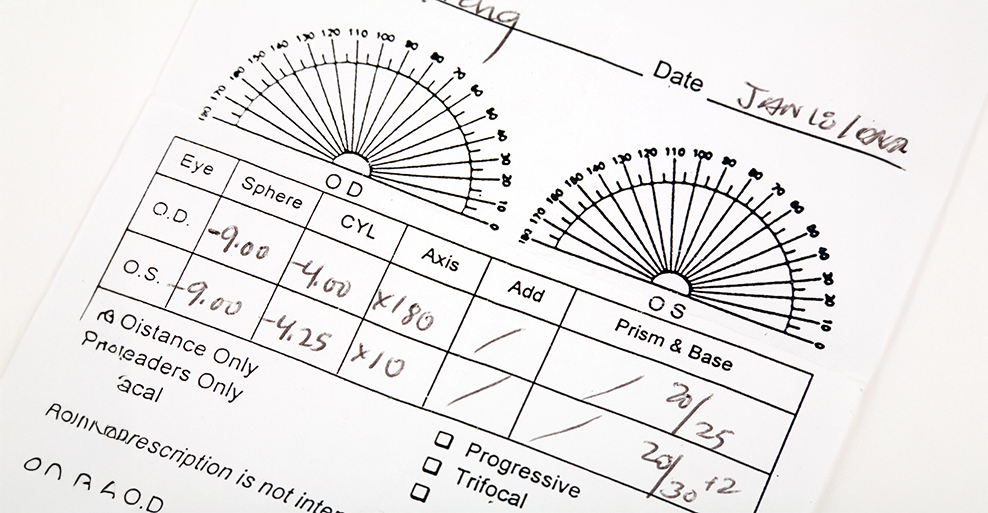
A prism in glasses bends light to help the eyes work together, reducing double vision and eye strain. This feature changes the direction of incoming light before it hits the retina, letting both eyes focus on one clear image.
Optometrists prescribe prism correction when eye muscles or coordination cause misalignment. This often happens with strabismus, convergence insufficiency, or some neurological issues. Prism lenses redirect light differently from standard prescription glasses. These lenses don’t change focus power but shift image position for better alignment. This adjustment helps people maintain comfortable vision for reading, driving, or using screens.
What Is Prism in Glasses?
A prism in glasses shifts an image’s position without changing its shape or size. Prism power uses prism diopter (Δ) and base direction as measurements. One prism diopter moves an image 1 cm at 1 meter. Most lenses use optical-grade crown glass (n ≈ 1.523) or polycarbonate (n ≈ 1.586) for consistent refraction across visible wavelengths (380–780 nm).
The base direction—up, down, in, or out—determines how the image shifts on the retina. For example, a base-in prism moves the image toward the nose, which helps align eyes that diverge outward. By altering the light path before it enters the eye, the brain receives a unified image from both eyes. This reduces double vision (diplopia).
How Prism Lenses Work?
Prism lenses work through refraction, following Snell’s Law (n₁sinθ₁ = n₂sinθ₂). When light enters the prism, it bends toward the base, shifting the image toward the apex. This shift compensates for angular misalignment between the eyes. A typical prescription prism ranges from 0.5Δ to 10Δ per lens, depending on the deviation measured by a cover test or Maddox rod.
Powers above 10Δ usually require Fresnel prisms, which are thinner and lighter. In a right-angle prism with 6Δ correction, the apex angle is about 4.3°, shifting the image 6 cm at 1 m. Since the lens redirects light rather than magnifying it, image size stays constant. Prism lenses must hold surface accuracy within ±0.05 mm to avoid distortion. Optical labs use a lensometer calibrated to ISO 8598-1 standards to check alignment and ensure consistent performance.
Types of Prism Corrections
Prism corrections include ground-in prisms and Fresnel (press-on) prisms. Ground-in prisms are built into the lens during surfacing and offer optical clarity with refractive index uniformity of ±0.001. These increase lens thickness by about 0.3 mm per 1Δ. Fresnel prisms use a thin polyvinyl chloride (PVC) film, around 1 mm thick, with microgrooves to mimic a larger prism’s effect.
This lightweight design works well for temporary or adjustable corrections. Clinicians prescribe horizontal prisms (base-in or base-out) for exotropia or esotropia, and vertical prisms (base-up or base-down) for hypertropia or vertical imbalance.
Some lenses combine both in oblique prisms, where the base sits at an angle between the horizontal and vertical axes. Ground-in prisms deliver higher optical quality but add weight and thickness, while Fresnel prisms reduce weight but slightly lower image contrast. The choice depends on the deviation’s magnitude, cosmetic needs, and how well the person adapts.
Why Prisms Are Prescribed?
Optometrists prescribe prisms to correct eye alignment and image processing. These prisms redirect light so both eyes work together more comfortably.
Common Vision Problems Addressed
Prism lenses manage binocular vision disorders like strabismus and diplopia. In strabismus, one eye may deviate in any direction by 1 to 20 prism diopters (Δ). Prisms shift the image by the same angular value, letting the brain fuse both images into one. Fresnel prisms, made from PVC and less than 1 mm thick, often serve as a temporary solution.
These attach to an existing lens before a permanent correction is added. Permanent prism lenses, made from CR-39 plastic or polycarbonate, can go up to 10Δ per lens and keep a refractive index between 1.49 and 1.59. These are used when misalignment is stable and needs long-term correction.
Symptoms That Indicate Prism Need
People needing prism correction often notice double vision, eye fatigue, or trouble focusing at various distances. These symptoms happen when the eyes’ visual axes fail to converge on the same target, so the brain gets two slightly displaced images. When deviation goes past 2Δ, the brain can’t merge images, leading to diplopia. Prisms bend light toward the base, realigning the perceived image and easing the load on the medial and lateral rectus muscles.
Other signs include head tilting, squinting, and disorientation while reading or driving. These behaviors show the visual system is trying to compensate for misalignment. Optometrists confirm prism need through cover tests and Maddox rod assessments, measuring deviation in degrees or prism diopters.
Benefits of Prism Lenses
Prism lenses restore binocular single vision by aligning the images each eye sees. By redirecting light with a precise angular offset, usually 0.5–10Δ, these lenses lower the neural effort needed for image fusion. This leads to better reading endurance and fewer headaches from eye misalignment. The lenses also improve depth perception by aligning both eyes’ visual axes.
For mild vertical deviations (1–3Δ), this alignment can boost stereopsis accuracy by up to 40 arcseconds. Fresnel prisms offer flexibility for treatment adjustments, letting optometrists change prism strength without replacing the lens. The grooved surface slightly reduces clarity, but that’s a fair trade for temporary or diagnostic use.
Frequently Asked Questions
How do prism glasses help with vision correction?
A prism lens typically uses a refractive angle between 0.5 and 10 prism diopters (Δ). This angle bends light so both eyes focus on the same retinal spot, correcting image displacement from conditions like strabismus or cranial nerve palsy. The prism shifts the image’s position without changing its size or clarity. Most prism lenses use optical-grade CR-39 or polycarbonate materials with refractive indices between 1.50 and 1.59. These materials let over 92% of light through and keep chromatic dispersion low. The optical alignment tolerance stays within ±0.25Δ, which prevents double vision and maintains stable fusion.
Prism geometry can be base-in, base-out, base-up, or base-down, depending on the direction of deviation. For instance, a base-out prism shifts images inward to offset outward eye drift. When prism power goes past 10Δ, edge thickness differences can exceed 2 mm. This may cause minor cosmetic or weight issues.
Prism glasses see daily use for reading, computer work, and distance tasks. These lenses improve comfort for people with convergence insufficiency or post-concussion ocular misalignment. Stronger prisms may slightly distort peripheral vision, so careful adaptation under optometrist supervision is important.
Can prism glasses improve driving safety?
Driving demands accurate depth perception and horizontal alignment within ±1° of visual axis deviation. By correcting diplopia, prism glasses help drivers judge distances between 5 and 50 meters and reduce reaction time errors that can exceed 0.3 seconds with uncorrected double vision.
The lenses’ refractive design ensures each eye receives a single, correctly oriented image. The prism angle realigns binocular input, restoring stereopsis accuracy to within 15 arcseconds—crucial for lane positioning and avoiding obstacles.
Are there any effective alternatives to wearing prism glasses?
Alternatives really depend on why and how much the eyes are misaligned. Vision therapy uses structured eye exercises, usually done 3–5 times per week, to strengthen the eye muscles and improve coordination. These routines can shrink small deviations under 6Δ. In mild cases, vision therapy sometimes makes prisms unnecessary.
Some patients with nerve-related or post-traumatic misalignment try botulinum toxin type A injections (1–5 units per affected muscle). This option temporarily relaxes the too-active eye muscles, letting the eyes realign for about 3–4 months. Muscle relaxation from the injection helps the eyes work together without relying on special lenses. It’s not permanent, but for some, it’s a welcome break from glasses.